

Takeaway
Body donors transcend death to teach students the intricacies of human anatomy and respect for each life.
Creative arts in medicine | January 15, 2026 | 2 min read
By Jasmine Lee, medical student, Johns Hopkins University
As a first year Johns Hopkins medical student, I had the opportunity to complete a full cadaver dissection as part of anatomy class. Although I was familiar with the concept of body donors (my late uncle had chosen to donate his body to science), I’d never even seen a dead person before the start of the course. Yet my feelings didn’t strike the first time I saw my classmates unveil the body or face of the donor. Rather, my imagination found me during odd moments. As I waited for my turn to use the scalpel and probe during class, I suddenly wondered if the donor might feel uncomfortable and placed my hand briefly over their preserved hand. As I propped my donor’s head on a wooden block to examine their cranial cavity, I imagined the donor reclining on more comfortable pillows, listening as I recited the entry points and functions of the cranial nerves.
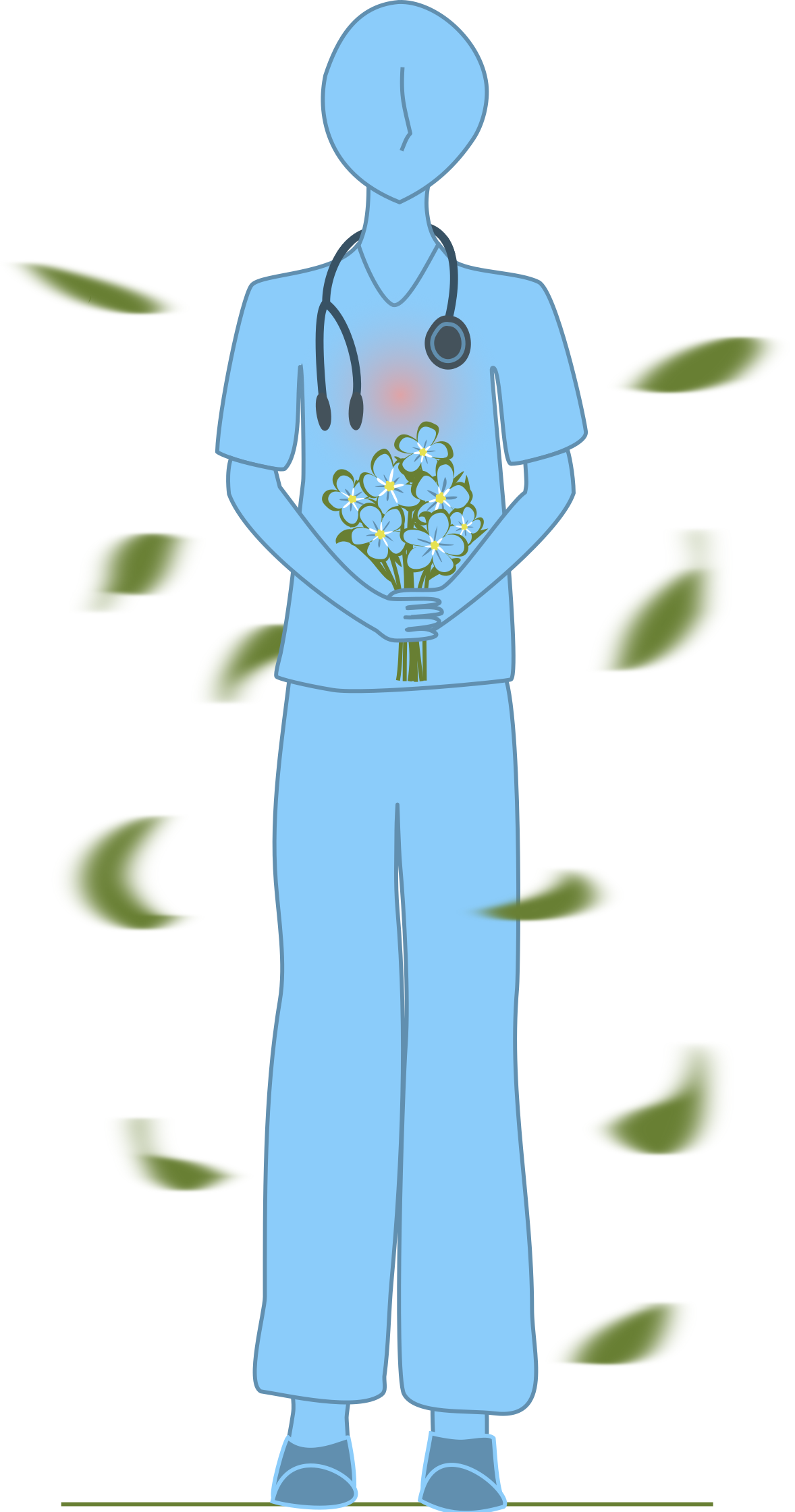
So, when I got the chance to contribute to the Anatomy Memorial Donor Ceremony honoring our body donors at the end of the course, I took the opportunity to design the ceremony’s printed program by symbolically illustrating the life that I’d been imagining in my own donor.
The program’s front and back covers reimagine our experience with anatomy donors as a living gift. Each of our donors generously volunteered to bring to life the images and words we studied in our anatomy textbooks and class materials. In doing so, they’ve transmitted a deeply privileged knowledge of the human body to each of us. Now we must safeguard and apply that knowledge to our future endeavors in medicine.
In this spirit, I chose to represent our donors in green, a color associated with life. Forget-me-nots adorn the donor’s body to symbolize the remembrance that the flower’s name implies. The donor is sometimes said to be our first patient, and as we advance in our medical careers, each of us will accumulate more memories from the patients that we meet. For that reason, we students are represented in the same blue color as the flowers.
I was deeply honored to be able to present the donors’ families with these illustrations through the printed programs at the ceremony. I hope that these artworks can inspire future classes of medical students to creatively reflect on their experience in anatomy dissection.
Author’s note: This writeup is adapted from the description I wrote as part of my display at the Anatomy Donor Memorial Ceremony on November 15, 2025.
This piece expresses the views solely of the author. It does not necessarily represent the views of any organization, including Johns Hopkins Medicine.