
Takeaway
Medicine is a public trust. Preserving this requires protecting awe, curiosity, and deep listening.
Passion in the medical profession | May 27, 2026 | 3 min read
By Michelle Sharp, MD, MHS, Johns Hopkins Medicine
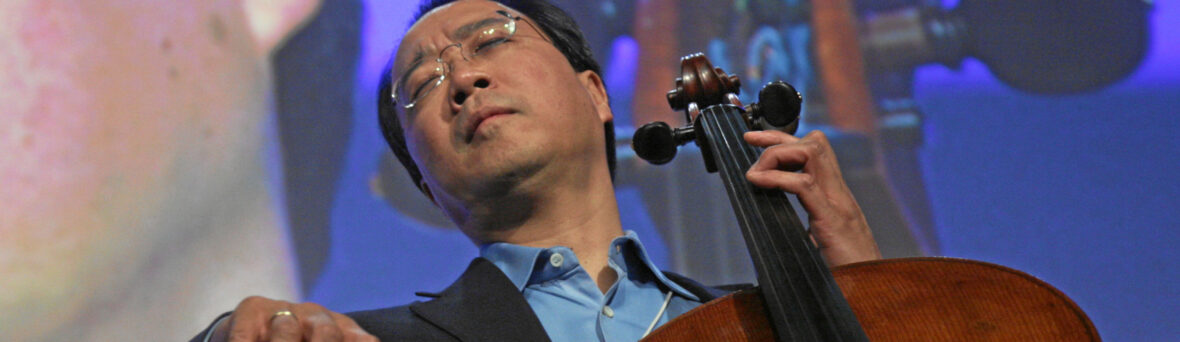
This year, I’ve had the privilege of leading a series of seminars at the Johns Hopkins’ Center for Innovating Medicine exploring the concept of medicine as a public trust and how to strengthen the trust. One was a conversation with world renown cellist Yo-Yo Ma, as well as Dr. Karl VanDevender. I took away several important lessons from our inspiring and uplifting discussion.
Medicine as a public trust
In response to the question, “What does medicine as a public trust mean to you?” Yo-Yo Ma replied, “Everything.” He shared that medicine is, fundamentally, a public trust. Not in abstraction, but in its most basic form: “If you are sick, I will come and help.” Our institutions, systems, and innovations must rest on this promise. Trust is both fragile and essential, and, in an era where medicine is becoming increasingly transactional, this idea feels urgent. How do we preserve trust? He shared that part of the answer lies includes intentionally reclaiming our values. We must know what matters to us and actively choose it.
“I am a human being first, musician second, and cellist third.”
—Pablo Casals, world renown cellist, 1876-1973
Yo‑Yo Ma shared this quotation with us and I found it profoundly challenging: Who are we before we’re healthcare professionals? Who are our patients before they’re diagnoses or room numbers? It reminds me that even when we encounter patients for only one single, fleeting moment, each person carries a full life beyond that instant. We’re privileged to enter their story with care and humility, and to treat the person in front of us while honoring their experiences, identities, and questions. Asking, “Who are you?” and listening to the answer helps us provide care that respects the whole human being, not just the presenting problem.
Awe and wonder
Awe and wonder drive curiosity. And awe can’t coexist with ego—the moment we place ourselves at the center of the universe, we lose the ability to be surprised, to listen, and to discover. In medicine, there’s a growing risk within the healthcare system that threatens awe and wonder. When metrics replace meaning, we drift further from the awe and wonder that drew many of us to medicine. Creating space for awe often takes effort and sometimes resistance to the prevailing culture. It means slowing down, listening more deeply to patients, and pushing back against systems that prioritize throughput over presence.
Burnout
Our discussion turned to burnout. Yo-Yo Ma shared his perspective that burnout is the overuse of certain muscles. What we need is not simply rest but homeostasis. This suggests that the solution to burnout is restoration of balance and reconnecting with our joy. That reconnection looks different for every person. He suggested that if we love our work, we should strive never to lose that love—like the amateur musician who plays for the sheer joy of it, we can return to the spirit that first drew us in.
There are times when the art of practicing medicine becomes heavy. Yo-Yo reminded me to be more intentional in returning, again and again, to the spirit I had as an intern on the Osler Medical Service—curious (albeit tired), open, and excited to make a positive impact on my patient’s life in whatever small way possible.
It’s been a wonderful experience joining in conversation and learning powerful lessons about trust, awe, wonder, and burnout. I’m deeply thankful to Yo‑Yo Ma and Dr. VanDevender for a rich dialogue.
This piece expresses the views solely of the author. It does not necessarily represent the views of any organization, including Johns Hopkins Medicine.