
Takeaway
Everyone faces doubts and setbacks during their career. All of us can remind learners and colleagues of both individual and collective strengths. We can also offer support to help “shield and rekindle” the spark of potential in others, and in ourselves.
Creative arts in medicine | April 1, 2026 | 1 min read
By Roshni Beeharry, MBBS, MA, FHEA, University College London
Flicker and flare
We watch,
watch as the match lights up,
the flame
sparks flares spits,
then threatens
to die out.
But not yet.
Not quite yet.
Rekindle it,
shield it with your hands,
protect it like
you would
protect a child
—your inner child.
There are winds that blow,
trying to rid you
of the fire that you
have
inside of you.
Don’t let them.
Let that fire grow and warm you
from the inside out.
Don’t let ANYONE tell you
“You are weak”
Or
“You have failed.”
Leave the doubters speechless,
Illuminate their dark corners.
Take their breath away.
I wrote this poem in an online poetry therapy workshop on the theme of resilience, held in July 2020 by the Irish Poetry Therapy Network. The poem we were offered for inspiration was “Resilience” by Oriah “Mountain Dreamer” House, a Canadian author whose work bridges the gap between contemporary poetry, spirituality, and memoir.
My poem was inspired by and dedicated to the final year medical students across the UK that were preparing to join the NHS that month, earlier than the usual August UK start date for Foundation Year trainees (interns), in order to support the workforce at the height of the COVID-19 pandemic.
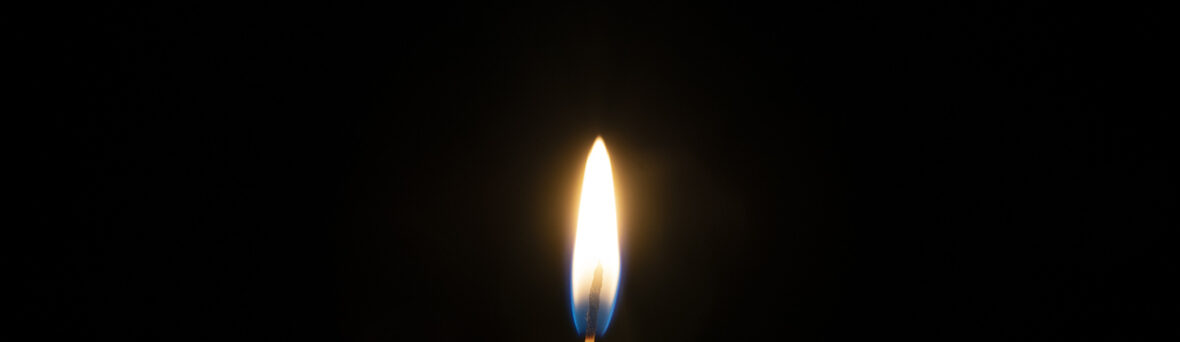
I used the metaphor of lighting a candle or match, the initial flame and flare of the flame signifying the potential of the hopes and excitement of the new doctor; the spitting of the flame and when it “threatens to die out,” represents also trepidation, doubts, fears of those times when the demands of the healthcare system were particularly high and potentially overwhelming, combined with self-doubts of imposter syndrome or potential criticism from senior colleagues, patients, the media and others (“ the winds that blow/trying to rid you/of the fire that you/have/inside of you”) . These may all lead to a literal burning out of the flame, the widespread prevalence of clinical burnout that affects many healthcare students and professionals.
This piece expresses the views solely of the author. It does not necessarily represent the views of any organization, including Johns Hopkins Medicine.