
Takeaway
Reading and writing about clinical experiences deepens compassion and understanding of the human condition. Reflecting on such stories may inspire us to provide more holistic care.
Lifelong learning in clinical excellence | March 27, 2026 | 2 min read
By Bruce Campbell, MD, Medical College of Wisconsin
Insightful clinicians have been writing meaningful literature for centuries. Maimonides expanded the understanding of both medicine and Torah; John Keats was a rich and lyrical poet; Anton Chekhov left us brilliant plays and stories; Sir Arthur Conan Doyle gave us Sherlock Holmes; and William Carlos Williams treated patients by day and wrote poetry and short stories by night.
As a medical student and resident in the 1970s and 80s, I was inspired by physician-writers Lewis Thomas, Richard Selzer, Samuel Shem, Félix Martí Ibáñez, and Sherwin Nuland. More recently, Atul Gawande (“Being Mortal”), Rana Awdish (“In Shock”), Paul Kalanithi (“When Breath Becomes Air”), Siddhartha Mukherjee (“Emperor of All Maladies”), Abraham Verghese (“Covenant of Water”), Danielle Ofri (“What Doctors Feel”), and others inspired and changed me with their writing because, in medicine, stories convey meaning. Patients benefit when caregivers learn to become fully attentive.
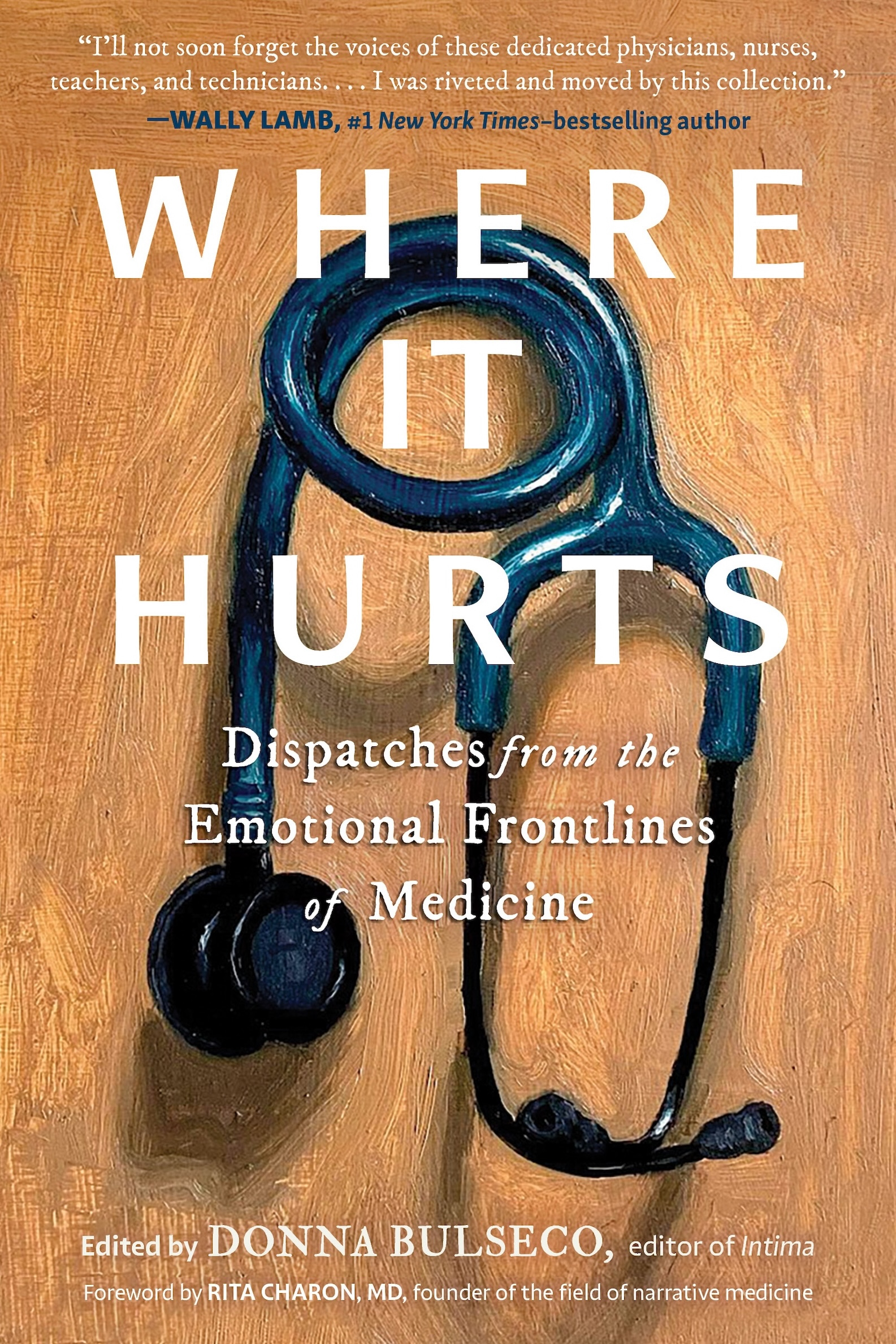
This intersection of medicine and creativity is a place of learning, discovery, excitement, and insight. A new anthology “Where It Hurts: Dispatches from the Emotional Frontlines of Medicine” offers 63 short stories, essays, and poems inviting readers to peek behind the curtain of medicine.
The book draws work from the archives of the online literary journal “The Intima.” The pieces range from haunting to harrowing; some express happiness, while others are humbling. Topics include medical training, surgical error, burnout, curiosity, loneliness, Covid-19, community, and the stages of life. Each offers a glimpse into how physicians are able to confront suffering rather than turning away.
Here are a few lessons learned from these clinical dispatches:
1. Face up to self-doubt.
In “Your First Pediatric Intubation,” a short story by pediatric ER physician Rachel Kowalsky, the narrator offers an instructive guide to a difficult procedure as well as a pep talk to herself. Don’t forget her admonition to wrangle your dragons along the way.
2. Look back with understanding, not anger.
In his essay “Bruised Apples,” retired physician and poet Jack Coulehan recalls the struggles of a high school classmate and Veteran, who struggles with a substance use disorder, and the frustration of being both a friend and a doctor to him.
3. Lean into unexpected moments.
Pediatric oncologist Trisha Paul shares the surprising arc of an encounter with a difficult young patient in her essay “Stroppy Sevens.” It’s how a snarl can turn into a smile if you give it time.
4. Connect the past and present.
In “Curveballs,” infectious disease physician Kaitlyn Reasoner shares a compelling meditation on the positive—and negative—pressure spaces in her life, showcasing how writing helped her process the Covid-19 health crisis and develop resiliency.
5. Feel and express empathy.
Clinical ethicist Elizabeth Lanphier expands on the experience of spending a long time living in an imperfect body in her poem “Haglund’s Deformity.” Like other narratives where a clinician becomes the patient, insights into the illness experience help inform the practice of medicine.
Finally, I’m honored that my own short fiction “Old Scrubs” appears in the anthology. My story describes a day near the end of an aging surgeon’s career. I began writing the piece years ago, but the story didn’t reach its ultimate shape until I’d performed my own final surgical procedure. Only then did the process of writing allow me to know what my protagonist had discovered. Writing is like that.
This piece expresses the views solely of the author. It does not necessarily represent the views of any organization, including Johns Hopkins Medicine.