Skip to content
C L O S L E R
  • Creative Arts in Medicine
  • Connecting with Patients
  • Passion in the Medical Profession
  • Lifelong Learning in Clinical Excellence
  • Topic Search
  • About Us
  • Our Team & Partnerships
  • Contact
  • Add Your Voice
  • Twitter
  • Facebook
  • LinkedIn
  • Instagram
  • YouTube
Subscribe
C L O S L E R
Moving Us Closer To Osler
A Miller Coulson Academy of Clinical Excellence Initiative
Johns Hopkins Medicine Logo
Creative Arts in Medicine
Connecting with Patients
Passion in the Medical Profession
Lifelong Learning in Clinical Excellence
Topic Search
February 12, 2026 | 6 min read

Between the monitor and the bedside: a metamodern reflection 

As clinical systems, assisted by AI, grow more accurate and efficient, the risk isn’t healthcare professional replacement. It’s the displacement of clinician judgment, responsibility, and physical presence that patients and families need most when outcomes are uncertain. 

March 25, 2019 | 2 min read

Movie Review of “End Game”

By Barry Bryant, MD, Johns Hopkins Medicine

The documentary "End Game" includes honest and reflective conversations with patients about what dying might be like, and investigation into what patients want the end of their life to look like.

June 28, 2023 | 3 min read

Dad’s End-of-Life Lessons

By Eric Last, DO, Northwell Health, Wantagh, New York

As my father was dying, it became clear that he had many misconceptions. This reminded me of how important it is to explore each patient’s understanding of palliative care and hospice.

"I asked his family what he'd want us to know about him and his daughter said he loves Irish music."

February 15, 2021 | 2 min read

End-of-Life Care During The Pandemic

By Ambereen Mehta, MD, Johns Hopkins Medicine

Hospital visitation is limited during the pandemic. To alleviate the stress of this restriction, connect patients with their families via video as often as possible.

October 13, 2025 | 2 min read

The word “want” may leave patients wanting 

When prior notes document that a patient doesn’t “want” a specific intervention, elicit the patient’s desired outcome and acceptable trade-offs. Then determine whether “I don’t want X” is absolute or conditional and align the care plan accordingly. 

November 2, 2021 | 2 min read

What All Clinicians Must Know About End-of-Life Care

By Pringl Miller, MD, San Francisco, California

Initiating and withdrawing life-sustaining medical treatment is the patient’s or their surrogate's decision, not ours. We must always honor their wishes.

June 5, 2024 | 2 min read

Near death

By Aurora Grutman, medical student, Johns Hopkins Medicine

Overcoming anxiety about the end of life allows one to explore concerns with empathy and openness. A willingness to learn about patients’ spiritual beliefs can help clinicians provide compassionate and holistic care.

March 28, 2019 | 6 min read

Integrating Psychology and Primary Care

By Benjamin Bensadon, PhD, University of Florida College of Medicine

Person-centeredness holds great potential to maximize healing in the way Osler envisioned more than a century ago. But to translate this concept clinically, psychology and medicine must come closer together. The closer we can come together, the closer we can come to Osler.  

July 10, 2023 | 3 min read

Dying With Peace And Joy 

By Lillie Shockney, RN, MS, Johns Hopkins Medicine

Empowering your patient to be the ultimate decision maker about all things related to the end of their life is fulfilling and meaningful for both of you. 

November 6, 2025 | 2 min read

Hearing more, saying less

 Asking patients “What are you most worried about?” may help you to understand their priorities. This can lead to the creation of a shared plan aligned with their values. 

"If I die, tell my mother I love her. If I get better, I'm going to visit her in Tennessee. She has ten acres and a farmhouse."

May 11, 2021 | 1 min read

Empathy at The End of Life

By Avani Prabhakar, MBBS, MPH, Johns Hopkins Medicine

At the end of life, clinicians who are present and listen compassionately may be entrusted with patients’ final wishes. Attempting to honor these requests is one way to serve.

April 8, 2025 | 3 min read

“Can you help me die?” 

By Carolyn Rennels, MD, University of San Francisco

When a patient asks about medical assistance in dying, prioritize deep listening and exploration of fears and hopes over immediate procedural responses. This can help reassure them that you’ll accompany them to the end. 

May 12, 2020 | 1 min read

Jump-start End of Life Discussions With “Death Over Dinner”

By Katie Nelson, PhD(c), MSN, RN, Johns Hopkins University School of Nursing

The pandemic has created a sense of urgency around advance care planning and end of life preparations. Resources like "Death Over Dinner" can help broach conversations about death, dying, and the end of life in a non-threatening (and even entertaining) manner.

February 5, 2019 | 2 min read

Creating a Clear Care Map for Patients

By Chris Myers

Showing patients and their families a clear map of their care plan can help bring awareness and healing to patients and families alike.

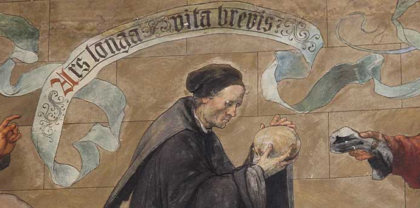
Hippocrates featured in the interior of the old town hall in Gõttingen, Niedersachsen, Germany. Public domain, Wikimedia Commons.

February 20, 2020 | 3 min read

“Life is short, and art long”

By Jonathan Yeh, MD, Johns Hopkins University School of Medicine

The art of honest and empathetic communication is fundamental to being an excellent clinician. And, it can be improved with intentional practice.

May 22, 2023 | 5 min read

“Death is Never Neat”

By Rachel Coghlan, PhD, MPH, Center for Humanitarian Health, Bloomberg School of Public Health

There are many ways we support those journeying through illness and death. Our authentic caring often finds itself in this sometimes-messy space.

November 9, 2021 | 3 min read

Giving Exceptional Care Without Exception

A one-liner works in comedy but leads to biases in medicine. Listening, getting to know, and learning from each patient will allow you to serve them best.

January 25, 2023 | 2 min read

All in The Family

In my general internal medicine practice, I’ve learned that getting to know a patient’s family gives a unique window into their lives.  

Jimmy Stewart, Donna Reed, and Karolyn Grimes in the film It's a Wonderful Life (1946).

January 14, 2026 | 6 min read

Lessons for healthcare delivery from “It’s a Wonderful Life” 

Choose George Bailey’s philosophy of stewardship—advocate for payment and employment models that reward continuity and community health. 

July 17, 2025 | 3 min read

Cricket and the cadence of care  

Like playing cricket, the art of medicine demands patience, teamwork, and a willingness to redefine victory—not every win is a cure. Sometimes success is helping a patient find comfort and dignity. 

Hobbit holes, Hobbiton, Matamata, New Zealand. Photo by Jackie Ick, flickr.com, public domain, wikimedia.org.

February 21, 2020 | 2 min read

Hobbits of Healthcare

By David Shih Wu, MD, Johns Hopkins Medicine

The excellent clinician demonstrates hobbit-like bravery by leaning into hard conversations.

June 22, 2023 | 2 min read

Caring with pride (archives, 2023)

By Corey Tapper, MD, Johns Hopkins Medicine

To ensure nonjudgmental and equitable care of LGBTQ+ patients, call and chart people by their preferred name and pronouns. I also wear a Pride flag lapel pin to show my support. 

April 30, 2018 | 4 min read

The 15 Values of a Pediatric Anesthesiologist

By Ivor Berkowitz, MBBCh, MBA, Johns Hopkins Medicine

A pediatric anesthesiologist shares the 15 values that have guided his career.

January 7, 2021 | 4 min read

3 Steps to Develop Your Philosophy of Caring

By Aidan Crowley, Medical Student, University of Pennsylvania

Identifying the principles that guide your care of patients will bring more meaning and purpose to your work. This can bring both you and your patients joy and fulfillment.

November 15, 2018 | 3 min read

You’re Always a Provider, Even in the Coffee Line

By Ishwaria Subbiah, MD, MS, The University of Texas MD Anderson Cancer Center

Opportunities to ease distress extend beyond the bedside and outside of the clinic to every interaction with our patients and also their caregivers.

October 10, 2019 | 2 min read

Our Greatest Teachers

By Vivek Murthy, MD, Johns Hopkins University School of Medicine

To find meaning in your clinical work, search for the words and moments that affirm your shared humanity with patients.

September 16, 2024 | 3 min read

What healthcare professionals can learn from Clover, the death doula 

By Scott Wright, MD, Johns Hopkins Medicine

A novel reminded me about best practices in caring for the dying. “The Collected Regrets of Clover” repeatedly stressed to acknowledge the emotional complexities surrounding death and to never look away from someone’s pain. 

February 11, 2021 | 6 min read

Checklists and Connections

By Neda Frayha, MD, University of Maryland

Take five minutes to connect with a patient with no medical agenda. You may be surprised by how much joy it brings both you and them.

May 15, 2025 | 1 min read

You don’t want to miss 

While vigilance in patient care is paramount, healthcare professionals must also look out for their own personal well-being. Cultivating these skills can ultimately improve the health of both patients and clinicians. 

February 24, 2022 | 3 min read

New dad and healthcare professional

By Ben Roberts, CRNP, AGACNP-BC, ACHPN, Johns Hopkins Medicine

Placing my child’s and my patients’ needs before my own gives me purpose. These responsibilities help mitigate burnout and allow me to give excellent care.

April 15, 2024 | 1 min read

When the end is near 

By Avani Prabhakar, MBBS, MPH, Johns Hopkins Medicine, Shubham Tomar, MBBS, MPH, Vanderbilt University Medical Center

At the end of life, loved ones often must make difficult decisions. Healthcare professionals can help ease this burden by showing empathy and compassion. 

"Each person is a universe."

November 13, 2024 | 2 min read

Cada persona es un Mundo 

All clinicians need to spend more time listening to patients. Not doing so limits our ability to understand patients’ perspectives and needs. 

December 14, 2023 | 2 min read

Listening for meaning

By Ben Roberts, CRNP, AGACNP-BC, ACHPN, Johns Hopkins Medicine

In my palliative care career, I’ve learned that aligning care with patient goals is one of the most important parts of clinical excellence. To do this, I listen to truly understand what the patient wants. 

November 4, 2020 | 3 min read

It’s All Relative

By Elisabeth Marsh, MD, Johns Hopkins Medicine

It's essential that we approach each patient with a fresh outlook. Bringing emotions, positive or negative, from a previous clinical interaction can adversely affect the next patient.

October 23, 2024 | 2 min read

Educated lucky: Making critical decisions without all the answers 

By Edana Mann, MD, Johns Hopkins Medicine

In critical care, we often make life-saving decisions with incomplete information. Teamwork is essential, and sometimes acting on our best-educated guess is the only option. These moments remind us of life’s fragility and the importance of trusting our instincts and each other. 

January 23, 2019 | <1 min read

Dr. Michele Bellantoni, A CLOSLER Look

By Gretchen Miller, Managing Editor

In long-term care we're able to develop personal relationships with our patients, and thus in our Geriatrics, physician burnout rates are lower. The personal relationships with patients create both meaning and joy.

January 19, 2023 | 2 min read

With Only a Nod

By Becky Sansbury, MDiv, Raleigh, North Carolina

Sometimes the best care we can give is to be quiet, observant, and appreciative of our patient’s sharing a life-changing moment.

October 16, 2023 | 1 min read

Clinging to Hope

By Avani Prabhakar, MBBS, MPH, Johns Hopkins Medicine, Nitin Narayan, medical student, Gujarat, India

A patient’s family wasn’t ready to accept that their loved one wouldn’t recover. From the encounter, I learned that sometimes it may be appropriate to delay such conversations for a little while. 

December 13, 2021 | 1 min read

Grace

By Farah Ali, DO, Johns Hopkins Medicine

Faith plays a significant role in many patients’ lives. Learning more about their beliefs can help us to understand them better and allows us to serve our patients in line with their values. 

May 24, 2018 | 2 min read

My Professional Totem

By Margaret Chisolm, MD, Johns Hopkins Medicine

A psychiatrist shares her story of how a painting by Raphael has reminded her of of why she wanted to become a doctor and what the profession of medicine is all about.

Plato, Greek philosopher. A disciple of Socrates and the teacher of Aristotle, he founded the Academy in Athens. This is his statue, located before the Academy of Athens, Greece.

June 29, 2022 | 3 min read

Being PerfecT in Healthcare 

By Mike Fingerhood, MD, Johns Hopkins Medicine, Scott Wright, MD, Johns Hopkins Medicine

Moral questions often arise in healthcare. Contemplating how our efforts might translate into the most good deserves our thoughtful consideration. 

June 11, 2018 | 5 min read

Caring For The Patient

By Michael Carducci, MD, Johns Hopkins University School of Medicine

An oncologist shares his inspiring clinical mission and values statement on noticing beauty and knowing his patients.

October 19, 2021 | 2 min read

Asking About Your Patient’s Pet

By Elizabeth Steuber, MD, Johns Hopkins Medicine, Todd Brenner, MD, Johns Hopkins Medicine

Ask patients about their pets. This can build a bridge to talking about topics like functional status, home life, and family dynamics.

October 21, 2020 | 3 min read

Show Me

By Jared Rubenstein, MD, Baylor College of Medicine

Asking patients to share photos and videos can give clinicians a deeper understanding of their lives. This may allow us to give better person-centered care.

July 5, 2022 | 2 min read

Dementia, Decisions, And Developing a Different Love 

By Drea Burbank, MD, Putumayo, Colombia

We must be respectful and balanced when presenting medical options to a patient’s caregivers. 

October 22, 2018 | 2 min read

Giving Compassionate Care

My goal is to to be a clinically excellent oncologist, which means being compassionate, spending time with patients and families in order to understand their needs, helping with treatment decisions, and being there for end-of-life decisions as well as hospice care.

Employers must cultivate a nurturing culture that supports the emotional and physical needs of their employees.

July 26, 2021 | 2 min read

How to Reduce Clinician Turnover

By Steve Kravet, MD, MBA, Johns Hopkins Community Physicians

When patients lose the clinician with whom they have an established relationship, they may suffer a relapse in their physical and/or mental illness. To retain valued healthcare professionals, employers must create a work culture that supports their needs.

January 21, 2026 | 3 min read

Holding the healers 

Patient deaths leave a mark—acknowledge grief and lean on colleagues and loved ones. Seeking support sustains you and strengthens the care you provide. 

"Spending time outdoors helps me cope with the stress and sadness of the job." -Dr. Jared Rubenstein

December 10, 2020 | 3 min read

Coping With Patients’ Heartbreak

By Jared Rubenstein, MD, Baylor College of Medicine

When supporting patients and their loved ones during times of great sadness and loss, cultivating a daily habit of self-care may protect against burnout.

May 31, 2018 | 6 min read

Tips for Taking Care of Patients, From a Physician Who’s Been One

By Scott Vasher, MD, Johns Hopkins University School of Medicine

The lessons I learned from being hospitalized have stuck with me and guided me in all of my practice.

Our Mission

Stimulating healthcare professionals and trainees to reflect on giving exceptional care to every patient.

C L O S L E R
  • Twitter
  • Facebook
  • LinkedIn
  • Instagram
  • YouTube
  • Creative Arts in Medicine
  • Connecting with Patients
  • Passion in the Medical Profession
  • Lifelong Learning in Clinical Excellence
  • About Us
  • Our Team & Partnerships
  • Contact
  • Add Your Voice
  • Subscribe
  • Donate

©2026 Miller Coulson Academy of Clinical Excellence,  Johns Hopkins Medicine.  All Rights Reserved.  Privacy Policy